HOURS: Mon–Sat

Comprehensive plus chemistry panel
Biochemistry tests assess the function of key organs like the liver, kidneys, and pancreas. These tests are crucial because these organs play vital roles in your pet's overall health, including metabolizing medications and maintaining essential bodily functions. Understanding how well these organs are working helps us ensure your pet's well-being and can guide any necessary adjustments to their care plan.
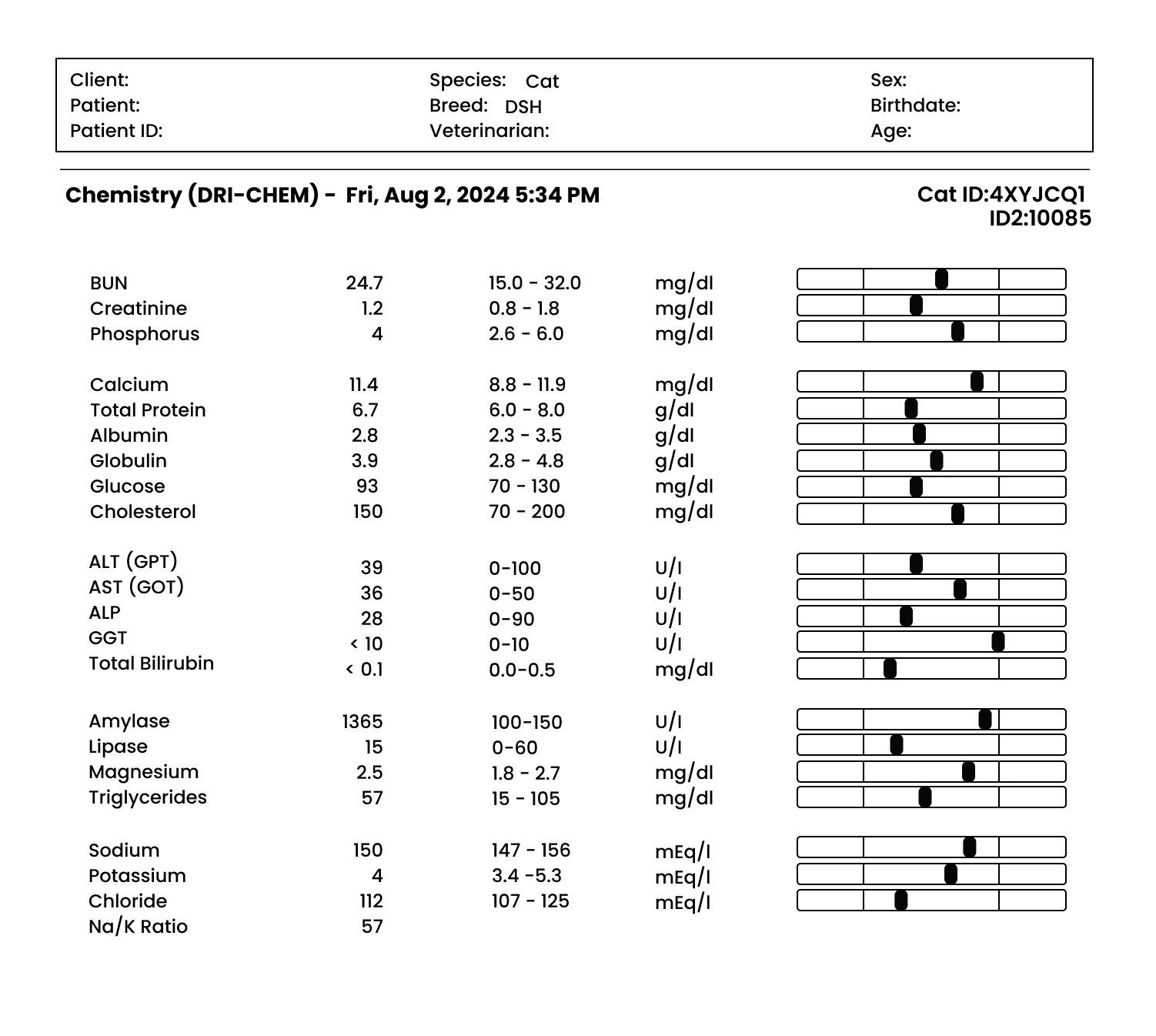
What do these values mean?
Kidney function (Values BUN, Creatinine, and Phosphorus)
BUN (Blood Urea Nitrogen)
Function: BUN measures the amount of urea nitrogen in the blood, a waste product from the breakdown of protein.
High - Can indicate kidney dysfunction, dehydration, or gastrointestinal bleeding
Low - May suggest liver disease, over hydration, or a low-protein diet.
Creatinine
Function: Creatinine is a waste product produced by muscle metabolism and is filtered out by the kidneys.
High - Typically indicates impaired kidney function or severe dehydration.
Low - Could be seen in cases of low muscle mass or in dogs on a protein-restricted diet.
Phosphorus
Function: Phosphorus is essential for bone health and energy production.
High - Common in kidney disease, especially in advanced stages.
Low - May be due to malnutrition, overuse of phosphate binders, or certain endocrine disorders.

BUN, Creatinine, and Phosphorus are crucial for assessing kidney function and overall metabolic health in cats. Elevated BUN and Creatinine levels commonly signal kidney issues or dehydration, whereas abnormal phosphorus levels can point to kidney disease or dietary problems.
Metabolic functions (Values Calcium, Total Protein, Albumin, Globulin, Glucose, and Cholesterol)
Calcium
Function: Calcium is vital for bone health, nerve function, and muscle contraction.
High - May indicate certain cancers, kidney disease, or hyperparathyroidism.
Low - Could suggest malnutrition, pancreatitis, or hypoparathyroidism.
Total Protein
Function: Measures the total amount of proteins in the blood, including albumin and globulin.
High - Could indicate dehydration, inflammation, or certain blood cancers.
Low - May suggest liver disease, kidney disease, or malnutrition.
Albumin
Function: Albumin is a protein produced by the liver that helps maintain blood volume and pressure.
High - Often a sign of dehydration.
Low - Can indicate liver disease, kidney disease, or chronic inflammation.
Globulin
Function: Globulins are a group of proteins involved in immune function and blood clotting.
High - May be associated with chronic infections, inflammation, or certain cancers.
Low - Could be due to immune deficiencies, liver disease, or protein-losing conditions.
Glucose
Function: Glucose is the primary source of energy for the body’s cells.
High - Often seen in diabetes, stress, or hyperthyroidism.
Low - Could indicate insulin overdose, severe liver disease, or prolonged fasting.
Cholesterol
Function: Cholesterol is a type of fat in the blood that is important for cell membrane structure and hormone production.
High - May indicate hypothyroidism, diabetes, or kidney disease.
Low - Can be associated with liver disease or malabsorption syndromes.

This group of values helps evaluate various aspects of health, including metabolic function, protein levels, and energy balance. Abnormalities in calcium, total protein, albumin, and globulin can reflect liver or kidney issues, chronic disease, or nutritional imbalances. Glucose and cholesterol levels provide additional insights into metabolic health and endocrine function.
Liver (ALT, AST, ALP, GGT, and total bilirubin)
ALT (Alanine Aminotransferase)
Function: ALT is an enzyme found in the liver that helps in protein metabolism.
High - Typically indicates liver damage or inflammation.
Low - Not usually significant, as ALT is generally expected to be low.
AST (Aspartate Aminotransferase)
Function: AST is an enzyme found in the liver and muscles.
High - May suggest liver damage, muscle injury, or hemolysis.
Low - Generally not a cause for concern.
ALP (Alkaline Phosphatase)
Function: ALP is an enzyme related to bile ducts and is found in the liver and bone.
High - Can indicate liver disease, bile duct obstruction, or bone disorders.
Low - Often not clinically significant
GGT (Gamma-Glutamyl Transferase)
Function: GGT is an enzyme that helps in the metabolism of glutathione and is found in the liver.
High - Suggests liver disease or bile duct issues.
Low - Typically not a concern.
Total Bilirubin
Function: Bilirubin is a byproduct of red blood cell breakdown and is processed by the liver.
High - Indicates liver disease, bile duct obstruction, or hemolysis.
Low - Not usually significant.

These liver-related values help assess liver function and detect liver disease or bile duct problems. Elevated levels of ALT, AST, ALP, and GGT typically indicate liver issues or muscle damage, while high total bilirubin levels suggest liver dysfunction or hemolysis.
Pancreatic Enzymes (Amylase, Lipase, Magnesium, Triglycerides)
Amylase
Function: Amylase is an enzyme that helps digest carbohydrates and is produced by the pancreas.
High - Can suggest pancreatitis or kidney disease.
Low - Not typically a concern.
Lipase
Function: Lipase is an enzyme that helps digest fats, also produced by the pancreas.
High - Often indicates pancreatitis.
Low - Usually not significant.
Magnesium
Function: Magnesium is important for muscle and nerve function, as well as bone health.
High - Can occur with kidney disease or excessive supplementation.
Low - May be seen with malnutrition, diarrhea, or certain diseases.
Triglycerides
Function: Triglycerides are a type of fat found in the blood and are used for energy storage.
High - Can be related to obesity, diabetes, or certain endocrine disorders.
Low - Usually not significant but can be associated with malnutrition.

These values provide insights into pancreatic function and metabolic health. Elevated amylase and lipase levels are often associated with pancreatitis, while abnormal magnesium and triglyceride levels can indicate metabolic or nutritional imbalances.
Electrolytes (Sodium, Potassium, Chloride, Na/K Ratio)
Sodium (Na)
Function: Sodium is an electrolyte that helps maintain fluid balance and nerve function.
High - Often indicates dehydration or kidney disease.
Low - May suggest kidney disease, overhydration, or certain endocrine disorders.
Potassium (K)
Function: Potassium is essential for normal muscle and nerve function.
High - Can occur with kidney disease, Addison’s disease, or severe cell damage.
Low - May be due to vomiting, diarrhea, or certain medications.
Chloride (Cl)
Function: Chloride is an electrolyte that helps maintain fluid balance and acid-base balance.
High - Often seen with dehydration or kidney disease.
Low - May be due to vomiting, diarrhea, or over hydration.
Na/K Ratio (Sodium to Potassium Ratio)
Function: The Na/K ratio helps assess the balance of sodium and potassium in the blood.
High - Often indicates Addison’s disease or severe kidney disease.
Low - Can suggest dehydration or other electrolyte imbalances.

Sodium, potassium, and chloride levels are crucial for fluid and electrolyte balance. Abnormalities in these values, along with the Na/K ratio, can help diagnose conditions related to hydration status, kidney function, and endocrine disorders.
Complete blood count (CBC)
A Complete Blood Count (CBC) is a vital diagnostic test for cats that provides detailed information about their blood health. It measures the levels of red blood cells (RBCs), which are responsible for carrying oxygen throughout the body, white blood cells (WBCs), which are crucial for immune function, and platelets, which are important for blood clotting. The CBC can help identify conditions like anemia, infections, inflammation, dehydration, and blood-clotting disorders. It also provides insights into how well a cat’s immune system is functioning and can detect early signs of illness, making it an essential tool in both routine check-ups and urgent care situations.
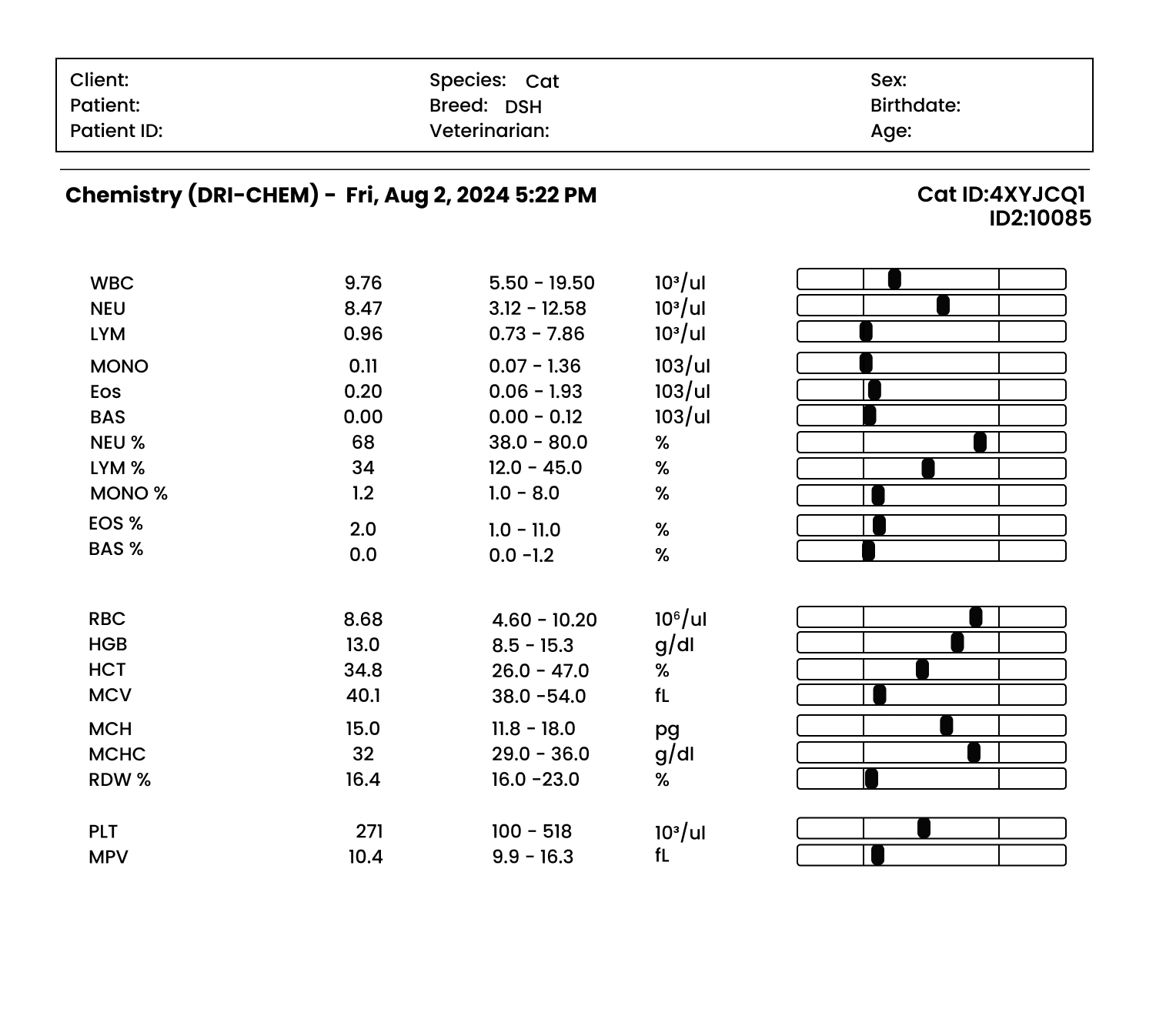
White blood cells
White blood cells (WBCs) are crucial components of a cat’s immune system, with each type playing a specific role in defending the body against infections and diseases. In a Complete Blood Count (CBC), the following values are often reported to help veterinarians assess the cat’s immune health:
NEU (Neutrophils)
Function: Neutrophils are the primary white blood cells responsible for fighting bacterial infections. They act as first responders by engulfing and destroying harmful bacteria.
NEU%: This represents the percentage of neutrophils out of the total white blood cell count.
High - (Neutrophilia): May indicate bacterial infections, inflammation, stress, or even certain cancers.
Low - (Neutropenia): Can suggest a severe infection where neutrophils are being rapidly used up, bone marrow issues, or immune-mediated diseases.
LYM (Lymphocytes)
Function: Lymphocytes are involved in the body's adaptive immune response. They include T cells, which destroy infected or cancerous cells, and B cells, which produce antibodies.
LYM%: This represents the percentage of lymphocytes out of the total WBC count.
High - (Lymphocytosis): Can be a sign of chronic infections, certain viral infections, or diseases like lymphoma.
Low - (Lymphopenia): May occur due to stress, corticosteroid use, or severe infections.
MONO (Monocytes)
Function: Monocytes help in the cleanup of dead cells and bacteria, and they migrate to tissues to become macrophages, continuing their protective roles.
MONO%: This is the percentage of monocytes out of the total WBC count.
High - (Monocytosis): Often associated with chronic inflammation, infections, or stress responses.
Low - (Monocytopenia): Low levels are less common and usually not clinically significant, though they may occur in certain bone marrow conditions.
EOS (Eosinophils)
Function: Eosinophils are important for combating parasitic infections and are active in allergic reactions.
EOS%: This is the percentage of eosinophils out of the total WBC count.
High - (Eosinophilia): Commonly seen with parasitic infections, allergies, or certain types of cancer.
Low - (Eosinopenia): Often not a cause for concern and can occur due to stress or steroid treatment.
BAS (Basophils)
Function: Basophils play a role in allergic and inflammatory responses by releasing histamine and other chemicals.
BAS%: This is the percentage of basophils out of the total WBC count.
High - (Basophilia): Rare, but can occur in allergic reactions, parasitic infections, or certain types of leukemia.
Low - (Basopenia): Basophils are often low or absent in healthy animals, so low levels are usually not significant.
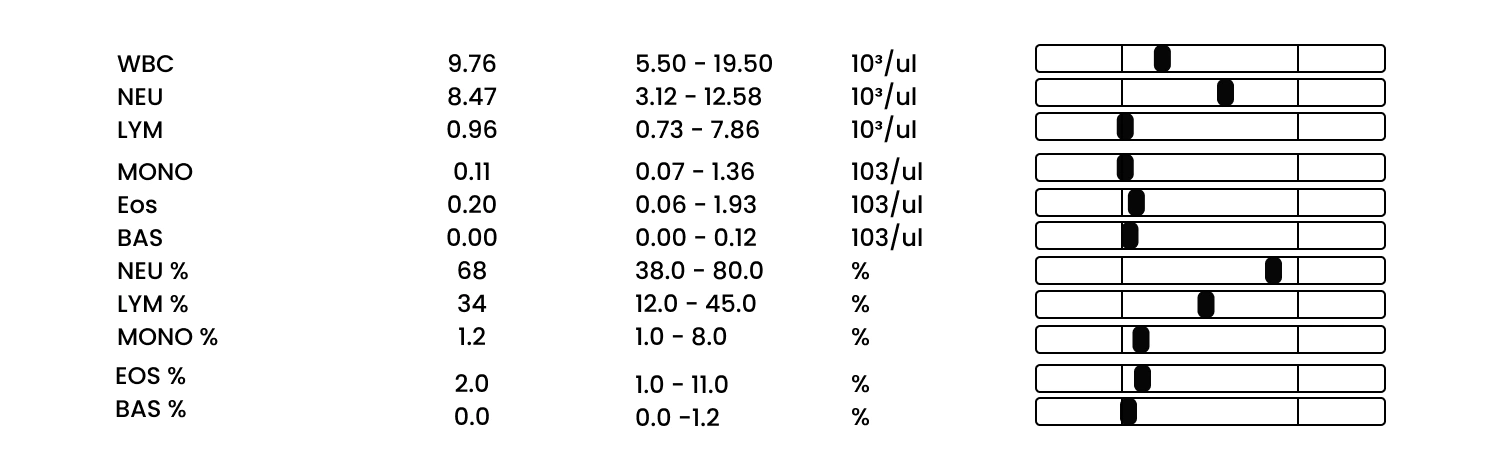
Summary
- NEU, LYM, MONO, EOS, BAS: These values represent the absolute counts of each type of white blood cell, indicating the actual number present in the blood.
- NEU%, LYM%, MONO%, EOS%, BAS%: These percentages show the proportion of each WBC type relative to the total white blood cell count, providing insight into the balance of the immune response.
White blood cell values provide insights into the immune system and response to infections or inflammation. Changes in NEU, LYM, MONO, EOS, and BAS levels can indicate various conditions, from infections to allergies and chronic diseases.
Red blood cells
Red blood cells (RBCs) are responsible for carrying oxygen from the lungs to the rest of the body and returning carbon dioxide back to the lungs for exhalation. In a Complete Blood Count (CBC), several values related to red blood cells are measured to assess a cat’s oxygen-carrying capacity and overall blood health:
HGB (Hemoglobin)
Function: Hemoglobin is the protein in red blood cells that binds to oxygen and transports it throughout the body..
High - May indicate dehydration, polycythemia (an increase in RBCs), or living at high altitudes.
Low - Often suggests anemia, which can result from blood loss, chronic disease, or nutritional deficiencies.
HCT (Hematocrit)
Function: Hematocrit measures the percentage of blood volume that is occupied by red blood cells.
High - Can indicate dehydration or polycythemia.
Low - Typically indicates anemia, which could be due to blood loss, bone marrow issues, or chronic diseases.
MCV (Mean Corpuscular Volume)
Function: MCV measures the average size of the red blood cells.
High - May be seen in regenerative anemias, certain vitamin deficiencies, or liver disease.
Low - Often associated with iron deficiency anemia or chronic diseases.
MCH (Mean Corpuscular Hemoglobin)
Function: MCH measures the average amount of hemoglobin per red blood cell.
High - Typically occurs when cells are larger and contain more hemoglobin, often seen in macrocytic anemias.
Low - Commonly associated with microcytic anemia, where the cells are smaller and contain less hemoglobin.
MCHC (Mean Corpuscular Hemoglobin Concentration)
Function: MCHC measures the concentration of hemoglobin in a given volume of packed red blood cells.
High - Rare but can indicate hereditary spherocytosis or other hemolytic anemias.
Low -Often seen in iron deficiency anemia, indicating that the cells are paler (hypochromic) and less dense in hemoglobin.
RDW% (Red Cell Distribution Width)
Function: RDW% measures the variation in size of the red blood cells.
High - Suggests a variation in RBC size, which can be seen in regenerative anemia or iron deficiency anemia.
Low - Typically indicates a more uniform cell size, which can be normal or seen in non-regenerative anemia.
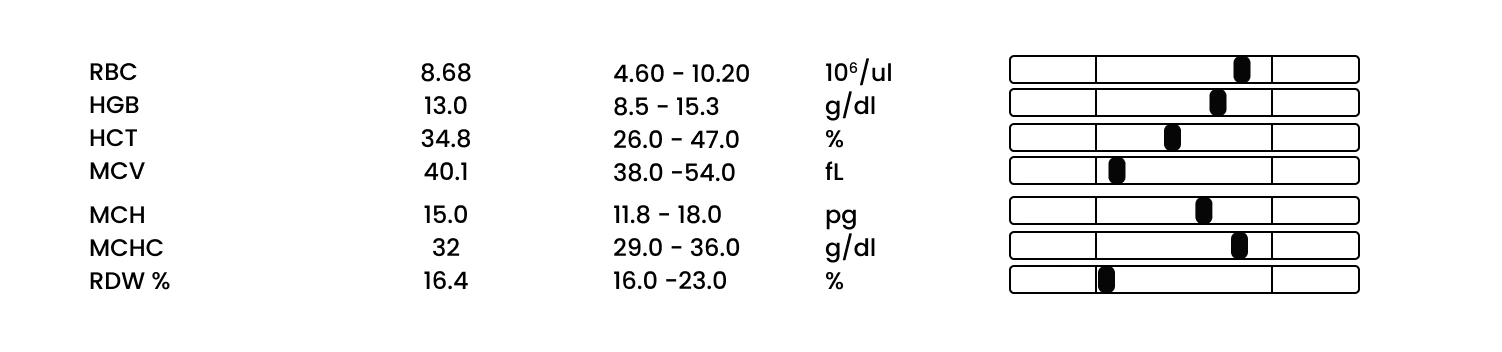
Summary
- HGB and HCT: Measure the oxygen-carrying capacity and volume of RBCs in the blood, essential for diagnosing anemia and hydration status.
- MCV, MCH, and MCHC: Provide details on the size and hemoglobin content of RBCs, helping to classify and understand different types of anemia.
- RDW%: Assesses the variation in RBC size, which can indicate active bone marrow response or underlying conditions affecting RBC production.
Red blood cell values provide information about oxygen-carrying capacity and anemia. Abnormal HGB, HCT, MCV, MCH, MCHC, and RDW% levels can help diagnose various types of anemia and other blood disorders.
Platelets
Platelets, also known as thrombocytes, are small blood cells that play a crucial role in blood clotting and wound healing in cats. When a blood vessel is injured, platelets gather at the site and form a plug to stop bleeding. In a Complete Blood Count (CBC), the following values related to platelets are measured:
PLT (Platelet Count)
Function: PLT measures the total number of platelets in the blood.
High - (Thrombocytosis): May indicate inflammation, infection, certain cancers, or other conditions that stimulate increased platelet production. It can also be a response to trauma or stress.
Low - (Thrombocytopenia): Can be caused by conditions such as immune-mediated diseases, bone marrow disorders, certain infections, or exposure to toxins. Low platelets increase the risk of bleeding and bruising.
MPV (Mean Platelet Volume)
Function: MPV measures the average size of the platelets.
High - Typically indicates that the bone marrow is producing larger, younger platelets, often in response to increased platelet turnover or destruction. This can be seen in conditions like immune-mediated thrombocytopenia or recovery from bone marrow suppression.
Low - Suggests that the platelets are smaller and may be associated with conditions that affect platelet production, such as certain bone marrow disorders or chronic disease states.

Summary
- PLT (Platelet Count): Reflects the number of platelets available for blood clotting. Abnormal levels can indicate a risk of bleeding or clotting disorders.
- MPV (Mean Platelet Volume): Indicates the average size of platelets, providing insights into bone marrow activity and platelet production.
Platelet values are essential for assessing clotting ability and bone marrow function. Abnormal PLT and MPV levels can help diagnose conditions related to bleeding disorders, platelet production, and destruction.
This comprehensive breakdown helps in understanding the various aspects of cat health through bloodwork, enabling accurate diagnosis and effective treatment planning.